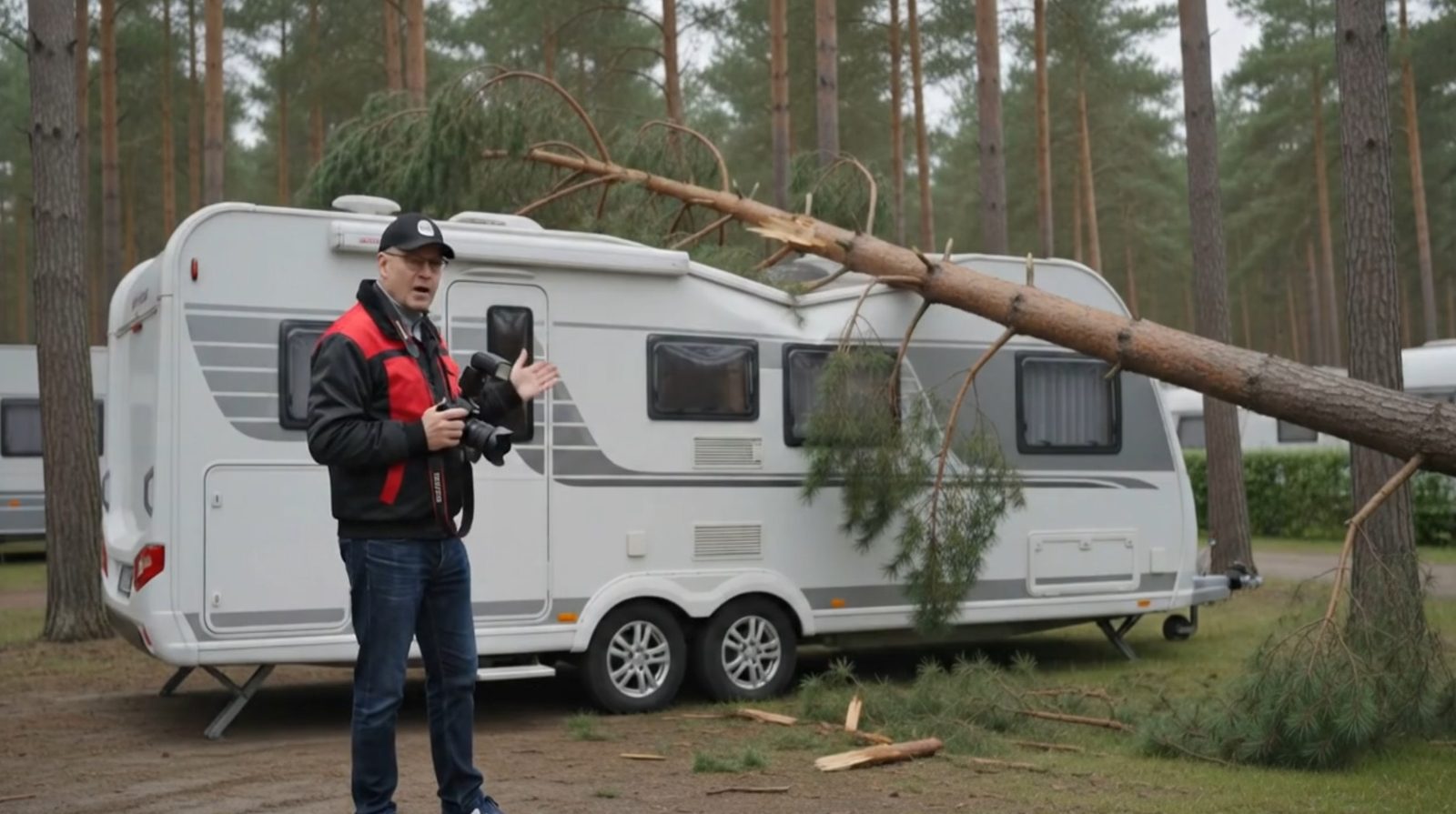
Damage Photo Checklist for Motorhomes and Caravans
Photograph the whole scene before you touch anything: vehicle in position, surroundings, cause, then damage from wide to close with a scale object in frame. Include the roof, the number plate, the chassis plate and the odometer. Do not clean, move or cover the vehicle first.
Before you take a single photograph
Three things ruin more claims than any error of photographic technique: clearing up, moving the vehicle, and covering it. Debris on the ground establishes what happened. The position of the vehicle establishes where it happened. A tarpaulin over a damaged roof hides the very thing in dispute. If safety allows, record first and tidy afterwards.
The sequence
- The scene, wide. Stand back far enough to show the vehicle in its pitch with the surroundings visible — the tree, the water line, the neighbouring vehicles, the slope. Four corners, four photographs.
- The cause. The fallen branch, the hailstones on the ground, the flood mark on the pitch, the forced lock, the broken glass. This is the photograph that is impossible to recreate an hour later.
- Identification. Number plate, chassis or VIN plate, and the odometer reading. These are what tie the documentation to the vehicle in a way an insurer can verify.
- All four elevations. The whole vehicle from each side, undamaged sides included. An insurer wants to see what was not damaged as much as what was.
- The roof. The single most neglected surface and the one that carries most hail and impact damage. From a ladder, an upper storey, a neighbouring vehicle, a first-floor terrace, or with a phone raised on a pole. If there is no safe way to do it, say so and leave it to the inspection rather than climbing onto a damaged roof.
- Damage, close, with scale. A coin, a ruler or a credit card in frame. Without a scale reference a photograph of a dent proves that a dent exists and nothing more.
- Interior. Water lines on the floor and furniture, fallen items, ceiling staining, the underside of rooflights.
- Accessories separately. Awning, bike carrier, satellite dome, solar panels, air conditioning shroud, rooflights, TV mast. Each is a separate line in an estimate and each needs its own photograph.
Technique that matters
- Raking light for hail. Dents in a light-coloured panel are nearly invisible in flat midday light and obvious in low-angle morning or evening light. Photograph hail damage early or late, along the panel rather than square on.
- Keep the originals. Send the full-size files. Messaging apps compress heavily and compression removes exactly the fine surface detail a hail assessment needs.
- Leave the location data on. Photographs carrying time and place stamps are worth considerably more than photographs that do not.
- Video walks well. A slow, steady walk-round on video captures context that individual frames miss. It supplements stills; it does not replace them.
Documents to photograph while you are there
Police record number for theft, break-in or vandalism. Site operator's written note of the event and the date. Registration document and insurance certificate. Any estimate a local garage has already produced. Receipts for anything you had to buy to make the vehicle safe or secure.
What not to do
Do not let a garage begin work "just to make it safe" before the damage is recorded. Do not dispose of damaged parts — a shattered rooflight or a torn awning is evidence, not rubbish. Do not wash the vehicle. Do not photograph only the worst area; an insurer reads a partial record as a partial claim.
Frequently asked questions
How many photographs is enough?
For a straightforward glass or impact claim, twenty. For hail on a large motorhome, well over a hundred — every panel, every roof section, every accessory. Too many is not a problem; gaps are.
My phone camera is old. Is that a problem?
Rarely. Light angle and coverage matter far more than resolution. A methodical set from an ordinary phone beats a scattered set from a good camera.
Can I send photographs by WhatsApp?
Yes, and it is the fastest route for triage. For a large hail series we will also give you an upload route so the files arrive uncompressed.
Should I photograph damage that existed before?
Yes. Recording pre-existing damage separately and honestly strengthens the claim rather than weakening it, because it removes the insurer's easiest line of challenge.
More on how we work
- How an On-Site Damage Appraisal Works: From First Photograph to Report
- Inspection Response Times Across Europe
- Who Pays for the Appraisal in a Comprehensive Claim
Damage now? Send photographs before the vehicle is moved.
This page describes the standard pattern of the German motor insurance market and is general information, not advice on your individual contract. Cover always follows your own policy conditions. MOTOEXPERT is a network of certified automotive appraisers (Kfz-Sachverständige). We produce independent technical reports. We do not provide legal representation. Named places and makes are descriptive references only; no commercial connection with their proprietors is stated or implied. All trademarks belong to their respective owners.