Is Your Motorhome Still Roadworthy? Post-Damage Safety Assessment
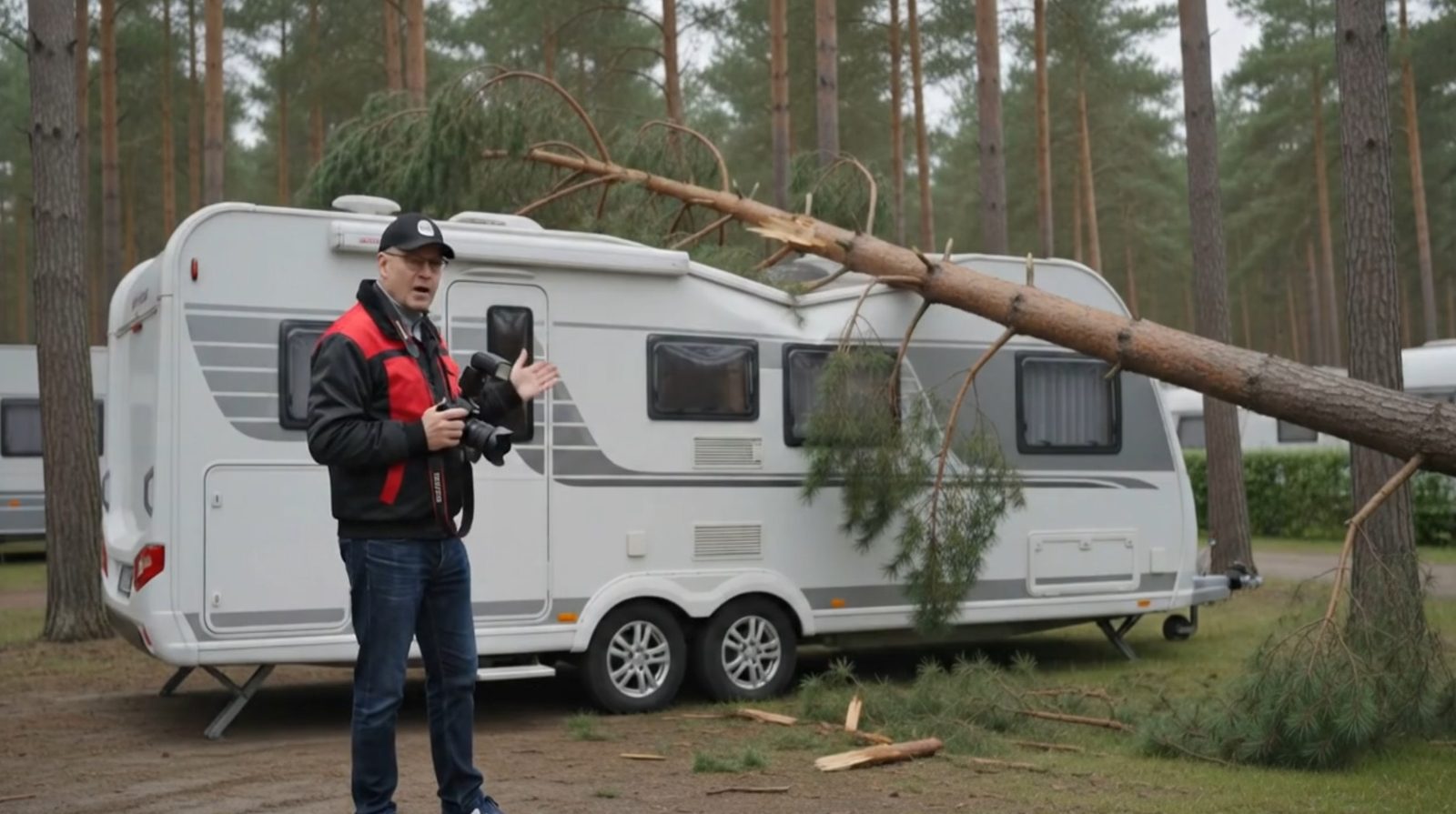
A motorhome can look drivable and be structurally compromised. The checks that matter are roof-to-wall joint integrity, seating of roof equipment, glazing security, load path through the chassis and habitation floor, lighting, and tyres. None of them are answered by walking round the vehicle.
Why the walk-round answer is unreliable
These vehicles are 3.5 to 7.5 tonnes of bonded composite structure travelling at motorway speed with a large frontal area. The load path runs through elements you cannot see: the bond between roof and side wall, the frame under a sandwich floor, the mountings that hold several hundred kilograms of roof equipment. Damage to any of them shows up as a small mark on the outside, or as nothing at all.
The specific risk is not that the vehicle stops. It is that a compromised structure fails progressively over 800 km of vibration and airflow, turning a repairable loss into a much larger one — or into a hazard.
What is actually checked
Structure and load path
Roof-to-wall and roof-to-cap bonded joints after any roof impact. Frame deflection around the impact point. Whether door and locker apertures still sit square, which is the cheapest available indicator that the body has moved. Chassis and running gear after a kerb, ramp or underside strike, including AL-KO and comparable chassis extensions where fitted.
Roof equipment
Air conditioning units, satellite domes, solar arrays and roof racks are heavy and are held by bonded or bolted mountings. After hail, impact or storm loading, the question is not whether they still work but whether they are still securely attached at motorway speed.
Glazing security
A cracked windscreen on a vehicle with this frontal area is a different proposition from a cracked windscreen on a car. Rooflights that no longer seat correctly can lift. Habitation windows with damaged hinges or catches can open in transit.
Water shedding
A punctured or deflected roof that sheds water adequately when parked may not do so under airflow at speed. This is routinely missed and it is what turns an impact claim into an impact-plus-water-damage claim.
Electrical and gas after water
Where water reached the habitation electrics or the gas installation, neither should be operated before examination. A wet gas locker whose drop-out vents are silted is a hazard independent of anything else.
Tyres and brakes
Flood submersion, kerb strikes and long standing on a soft pitch all matter. Tyre age matters on these vehicles more than on cars, because they cover low mileage over many years.
Three possible answers
- Safe to drive. Damage is cosmetic or contained, the load path is intact, and the drive home will not make it worse.
- Drivable with conditions. Speed limit, route restriction, roof equipment removed or secured, water ingress temporarily sealed. Stated explicitly in the report so that the insurer knows the drive was taken on assessed terms and not on optimism.
- Not to be driven. Transport arranged. At which point the comparison between local repair and repatriation becomes an arithmetic question, and the report should already contain the numbers for it.
The interface with your breakdown cover
Recovery, towing and repatriation are normally the province of a breakdown or assistance policy, not of your comprehensive cover. They are separate files with separate providers. Comprehensive answers for the substance of the damage; the assistance policy answers for moving the vehicle. Confusing the two costs time at exactly the moment you have none.
Where we inspect for this type of damage
Slovenia: Bovec · Kobarid · Bled · Mojstrana · Mozirje · Tolmin · Trenta · Vipava · Jezersko · Kamnik · Kranjska Gora · Logar Valley · Luče · Maribor
Austria: Döbriach · Faak am See · Salzburg · Hinterstoder · Kramsach · Längenfeld · Natters · Nenzing · Obertraun · Rauris · Schladming · Lofer · Mayrhofen · Murau · Seefeld in Tirol · Zell am See
France: Fréjus · Saint-Raphaël
Switzerland: Sion · Arolla · Engelberg · Flims · Interlaken · La Fouly · Lauterbrunnen · Lenzerheide · Vitznau · Davos · Saas-Fee · St. Moritz · Val Müstair · Vallemaggia · Zermatt / Täsch
Czech Republic: Rožnov pod Radhoštěm · Trutnov · Beskid Mountains · Böhmerwald · Giant Mountains · Špindlerův Mlýn
Croatia: Makarska
Netherlands: Valkenburg
Poland: Bieszczady · Karkonosze · Zakopane
Frequently asked questions
Can I drive home with a cracked windscreen?
It depends on the crack, its position and the vehicle. On a large frontal area this is a materially different question from the same crack on a car, and it should be assessed rather than assumed.
The vehicle looks fine after a branch hit the roof. Is it?
Not necessarily. Point loading transfers through the roof structure into the roof-to-wall joint over an area far larger than the visible damage, and that joint is what keeps water out at speed.
Who decides whether the vehicle may be driven?
The appraiser gives a technical assessment and states the conditions. The decision remains yours, but with the report you are making it on evidence.
Does my breakdown cover pay for transport home?
Normally yes, if you hold it — recovery and repatriation sit with an assistance policy, not with comprehensive cover. They are two separate claims.
More damage-type guides
- Hail Damage to Motorhomes and Caravans: Complete Assessment Guide
- Storm, Gale and Fallen-Tree Damage at European Campsites
- Flood and Inundation Damage to Motorhomes and Caravans
- Theft and Break-In at a Campsite Abroad: Documenting the Claim
- Awning, Carrier and Accessory Damage: Where the Cover Limits Bite
- Glass, Rooflight and Impact Damage on Motorhomes and Caravans
- Marten Bite, Rodent and Wildlife Damage
- Total Loss: Repair Cost, Replacement Value and Residual Value
- Water Ingress and Delamination: What Comprehensive Cover Does Not Pay
- Fire, Gas-System and Lightning Damage
- Manoeuvring and Pitch Damage: The Most Common Own-Fault Claim
- Vandalism Damage: Why It Sits Under Fully Comprehensive Only
Damage now? Send photographs before the vehicle is moved.
This page describes the standard pattern of the German motor insurance market and is general information, not advice on your individual contract. Cover always follows your own policy conditions. MOTOEXPERT is a network of certified automotive appraisers (Kfz-Sachverständige). We produce independent technical reports. We do not provide legal representation. Named places and makes are descriptive references only; no commercial connection with their proprietors is stated or implied. All trademarks belong to their respective owners.