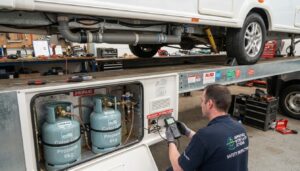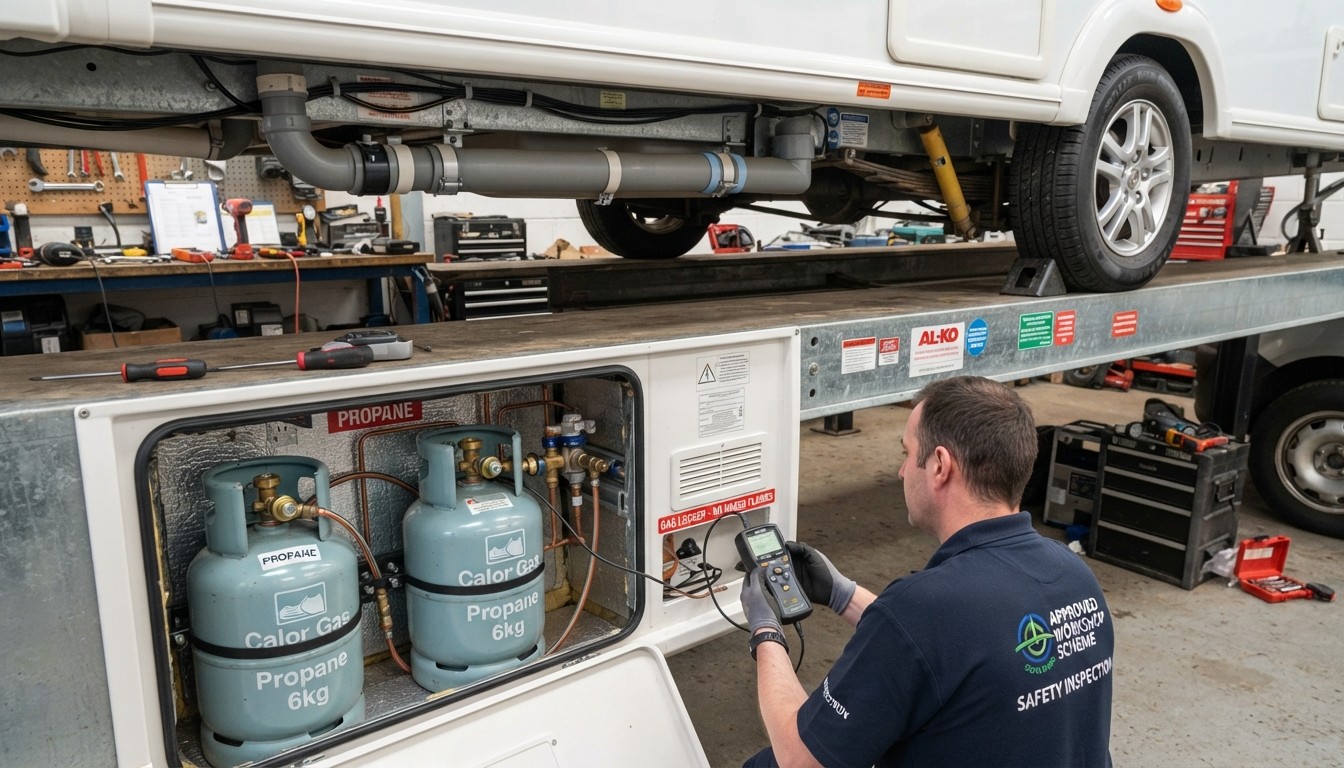
A combined inspection should assess your fixed LPG installation and vehicle floor separately, so gas safety and structural condition are both addressed. A caravan gas system and underfloor damage inspection can record both concerns in one professional report. Delamination means separation of bonded layers within a floor or panel.
You may need this assessment if your caravan or motorhome has a soft floor, damaged gas locker, or signs of water entry. A visual structural assessment does not replace the G 607 gas inspection required in Germany. It helps you understand the vehicle’s condition and what may need further testing or repair.
Key Takeaways
- G 607 checks the fixed gas installation; a structural assessment checks visible floor and locker damage.
- A soft floor or damp reading needs careful follow-up, not a quick diagnosis.
- In Germany, a permanently installed LPG system needs a valid G 607 inspection.
- A combined report can record separate gas and structural findings.
- If you smell gas, shut off the supply only if safe, ventilate without operating electrical switches or using a flame, leave the vehicle and seek assistance from outside.
What Does a Caravan Gas System and Underfloor Damage Inspection Cover?
A G 607 inspection tests the fixed gas installation, while a structural assessment looks for damage to the locker and surrounding floor. The two checks answer different questions, and a combined report can keep their findings clear.
The gas inspection tests pressure, leaks and correct operation across the system. A separate visual check records damage to the locker, floor junctions and underbody, but does not confirm the gas installation’s safety.
Gas installation and locker checks
A G 607 specialist uses a pressure pump to test tightness, connected appliances, pipes and technical components. The check also covers operation, safety valves, exhaust pipes and thermocouples, which stop gas flow if a flame goes out.
The inspection checks gas regulators, hoses and shut-off valves subject to a ten-year replacement requirement. It also checks cylinder restraints and whether the gas cupboard closes tightly.
- Pressure and leak testing of pipes, connections and appliances.
- Correct operation of connected gas appliances and technical components.
- Thermocouple operation and safety valves.
- Cylinder restraints that keep gas cylinders upright.
- An unclosable locker ventilation opening of at least 100 cm² at or just above floor level.
- No electrical equipment inside the gas locker.
Gas leaks can cause fire or explosion, while faulty combustion can create carbon monoxide. Treat gas safety as a specialist check, not a visual guess.
Floor, locker and underbody condition
The structural inspection looks for visible damage around the locker, nearby floor edges and the vehicle’s underside. It may record cracked joints, impact marks, rust or a panel that has pulled away from its frame.
These signs do not prove that the gas system leaks. Nor does a visual look establish the full extent of hidden floor damage. A professional may recommend further tests when the surface or structure raises concern.
Keep the locker ventilation opening clear and confirm that the cylinder restraints hold the cylinders upright.
How to Assess Underfloor Damp and Delamination
A floor that feels soft underfoot, or shows sagging or unexplained creaks, deserves a closer damp and structural check. These signs can point to water entry or hidden damage, but they do not show how far it has spread.
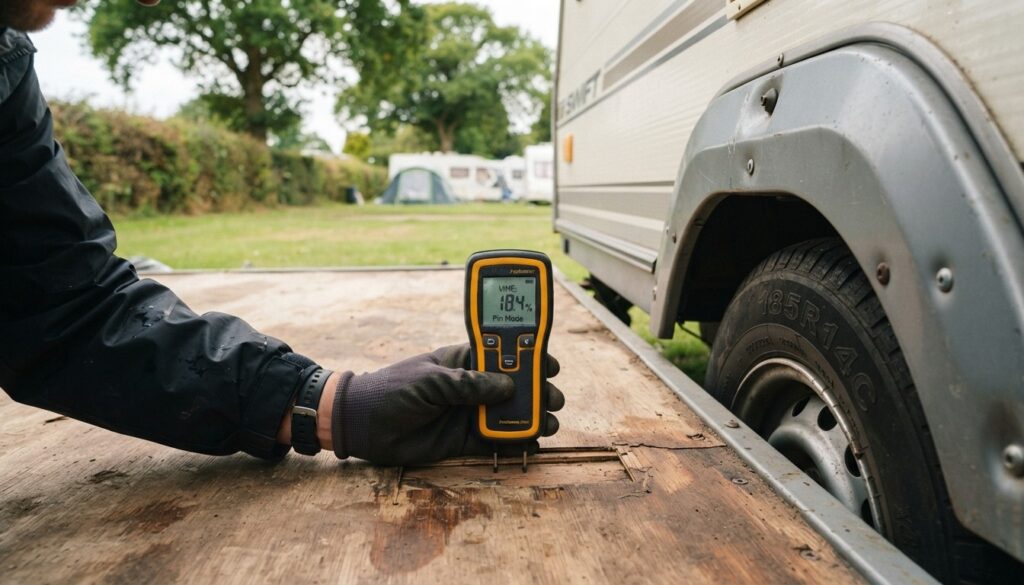
A moisture meter provides screening readings, not proof that concealed floor layers are sound. A careful inspection combines readings with what you can see, feel and learn about the vehicle’s history.
Signs to look for inside and underneath
Walk slowly across the floor and notice any soft or spongy patches. Sagging, creaks, lifted edges and damage around joins can also signal trouble.
Check seals for gaps or areas that look cracked and worn. Look at the locker-floor junction, wheel-arch areas and openings where fittings or pipes pass through the body.
Inside the habitation area, a damp assessment can cover three surfaces: walls, roof and floor. Stains, swelling or a musty smell may help you find places that need closer attention.
Inspect the underside where you can do so safely. Damaged edges or signs of water near a floor opening can help focus a professional check, but surface marks alone cannot show the condition of every layer.
Using moisture readings as screening evidence
A moisture meter helps identify areas for closer examination. Take care to compare readings with the material, surface and location, since these can affect what a reading means.
One high reading does not establish the extent of concealed damage. Readings need context from nearby areas and visible signs, and a professional may need to test the structure further.
The risks of ignoring water entry include ongoing damage to the floor system and nearby panels. Give a specialist enough time to inspect the area rather than relying on one quick reading.
Air movement and the vehicle’s past exposure to water may help explain why readings differ between spots. Record where each reading was taken so the location remains clear during follow-up.
Use the same care with a motorhome as with caravans, especially around openings and joins. Treat a suspicious reading as a reason to investigate the location and surrounding structure, not as a stand-alone diagnosis.
When Is a G 607 Gas Inspection Required in Germany?
In Germany, a permanently installed LPG system in a leisure vehicle needs a valid G 607 inspection, with periodic checks no more than 24 months apart. Since 19 June 2025, this rule applies to leisure vehicles such as caravans and motorhomes.
You must not operate the gas system without a valid inspection certificate. The inspection is also due at key points in the vehicle’s use or after certain changes.
| Trigger | When inspection is due | Required position |
|---|---|---|
| First use | Before the system is used for the first time | Valid G 607 inspection certificate |
| Periodic renewal | At intervals of no more than 24 months | Keep the certificate valid |
| Changes requiring inspection | After a change that requires an inspection | Inspection before use of the changed system |
| Return to service | Before the system is put back into service | Valid inspection certificate in place |
The rule covers regular gas use in a vehicle with a fixed LPG installation. Plan the next gas inspection from the certificate’s expiry date, rather than waiting for a service visit.
A missed deadline can lead to a fine of €15 to €60, depending on how long the inspection is overdue. The fine does not make the system safe to use.
Keep the certificate with your vehicle records, so you can check its status when planning a trip. A vehicle may pass its main inspection, the HU, while its gas certificate still needs attention.
Check the certificate’s validity before using the gas system, not only when you book the vehicle’s HU.
Underfloor Heating Options and Their Electrical Load
Yes, underfloor heating is available for caravans, but its electrical demand depends on whether you choose a permanent film or a portable mat. A permanent system can draw more total power as the heated area grows, so vehicle capacity matters.
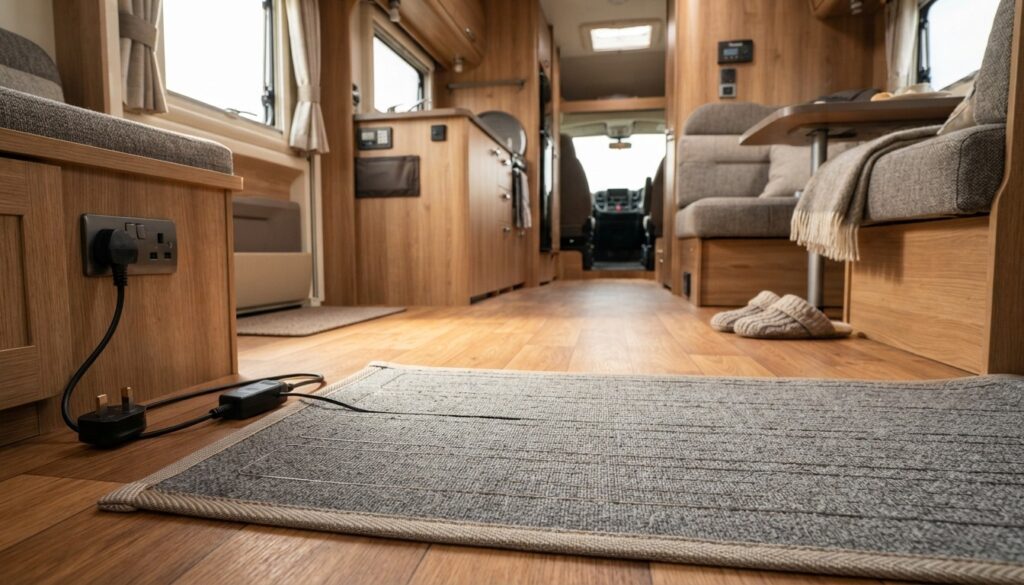
Permanent electric film usually uses 130 W/m² to 300 W/m². A portable mat or rug usually uses 100 W to 300 W for the whole product, rather than for each square metre.
| Heating option | Stated or example input | Practical consideration |
|---|---|---|
| Permanent electric film | 130 W/m² to 300 W/m² | Total power rises with the heated area |
| Portable electric mat or rug | 100 W to 300 W for the whole product | Check the product’s full load against available power |
| Gas-heater example | 300 g of gas per hour for 24 hours | Cooking and refrigerator use also affect cylinder runtime |
A permanent film needs a suitable installation and enough electrical capacity for its full area. A portable mat has a stated total draw for the product, which makes its load easier to compare with the vehicle’s available power.
Electrical capacity and installation suitability need checking for your particular vehicle. A motorhome or camper may have limits set by its power supply and existing systems, so do not assume every heater will suit every layout.
Gas heating uses a different supply, and gas appliances can draw from the same gas cylinders as cooking or refrigeration. The example in the table is not a universal estimate of how long your cylinder will last.
For a winter-use example, a 300 g-per-hour heater running for 24 hours, alongside cooking and refrigerator use, gives daily use of 7.83 kg. That example estimates 1.4 days from an 11 kg cylinder.
Propane has a calorific value of 12.87 kWh/kg, while butane has 12.70 kWh/kg. These values help estimate fuel use from an appliance’s rated input, but actual runtime also reflects other gas use.
Base any runtime estimate on the appliance input and the other gas uses operating at the same time.
What Should Your Inspection Report Include?
Your report should make clear which findings are structural observations and which belong to the separate G 607 inspection. A useful report records where damage appears, what evidence supports the finding and what needs more testing.
A vehicle condition report does not replace a valid G 607 inspection. The gas inspection result has its own certificate and inspection report, separate from the vehicle’s HU.
Findings, evidence and next steps
A combined report should describe observed damage and name its location, such as a floor edge beside the locker. It should note evidence gathered, areas that need specialist testing and recommended next actions.
A habitation check can cover six areas: gas, water, electrical systems, damp, ventilation and safety equipment. Its completed report can set out findings and recommendations for the work that follows.
Keep the structural findings distinct from the G 607 result. A condition report cannot stand in for the valid gas inspection certificate.
If gas use is part of the concern, recording appliance input can help frame later fuel estimates. For example, one winter-use estimate combines heater use with cooking and refrigerator demand, rather than treating the heater as the only load.
Water-leak insurance cover depends on your policy terms and the circumstances of the leak. Check the wording and speak with your insurer before assuming a repair will be covered.
Preparing for a professional assessment
Give the assessor clear records and a plain account of what you have noticed. Have these items ready:
- Your existing gas certificate.
- Appliance or vehicle documents.
- Records of past repairs.
- A clear description of symptoms or leak history.
Clear details help the assessor compare current signs with earlier repairs and changes. Customers can also point out when a symptom first appeared and whether it changes with use or weather.
Keep the inspection report and any gas certificate with your vehicle records.
Conclusion
A sound vehicle assessment keeps gas compliance and structural condition separate, even when one report records both. A valid G 607 inspection addresses the fixed gas system, while a structural floor assessment examines damage such as delamination.
Use the report to understand which findings need repair or further testing, and keep the gas certificate current for your vehicle. Neither document should be mistaken for the other.
Contact car-appraisal.eu to arrange a professional report for your caravan or motorhome.
FAQ
What gets checked on a gas safety check?
How to check if a caravan has damp?
Does caravan insurance cover water leaks?
Can you have underfloor heating in a caravan?
What is the downside of underfloor heating?
Are gas heaters safe in caravans?
Does caravan heating use a lot of gas?
Wycena szkody: samodzielnie czy z rzeczoznawcą MOTOEXPERT?
Porównaj, zanim ubezpieczyciel zdecyduje za Ciebie.
| ✗ Samodzielnie (kalkulator / AI ubezpieczyciela) | ✓ Z MOTOEXPERT + rekomendowany Adwokat |
|---|---|
| Wycena rzeczoznawcy ubezpieczyciela — interes płatnika, ryzyko zaniżenia | Niezależna certyfikowana opinia techniczna — pełny kosztorys wg stawek rynkowych |
| Pominięte pozycje: utrata wartości, auto zastępcze, holowanie | Komplet roszczeń: utrata wartości pojazdu, auto zastępcze, koszty dodatkowe |
| Samotne negocjacje z ubezpieczycielem, bariera językowa | Obsługa po polsku + rekomendowany Fachanwalt für Verkehrsrecht do reprezentacji prawnej |
| Sztuczna inteligencja nie stanie za Tobą w sądzie — koszt błędu ponosisz Ty | Szkoda z OC sprawcy w Niemczech przy jednoznacznej odpowiedzialności: uzasadnione koszty rzeczoznawcy co do zasady pokrywa ubezpieczyciel sprawcy (§ 249 BGB) |
📷 Zgłoś szkodę przez WhatsApp — wstępna ocena na podstawie zdjęć