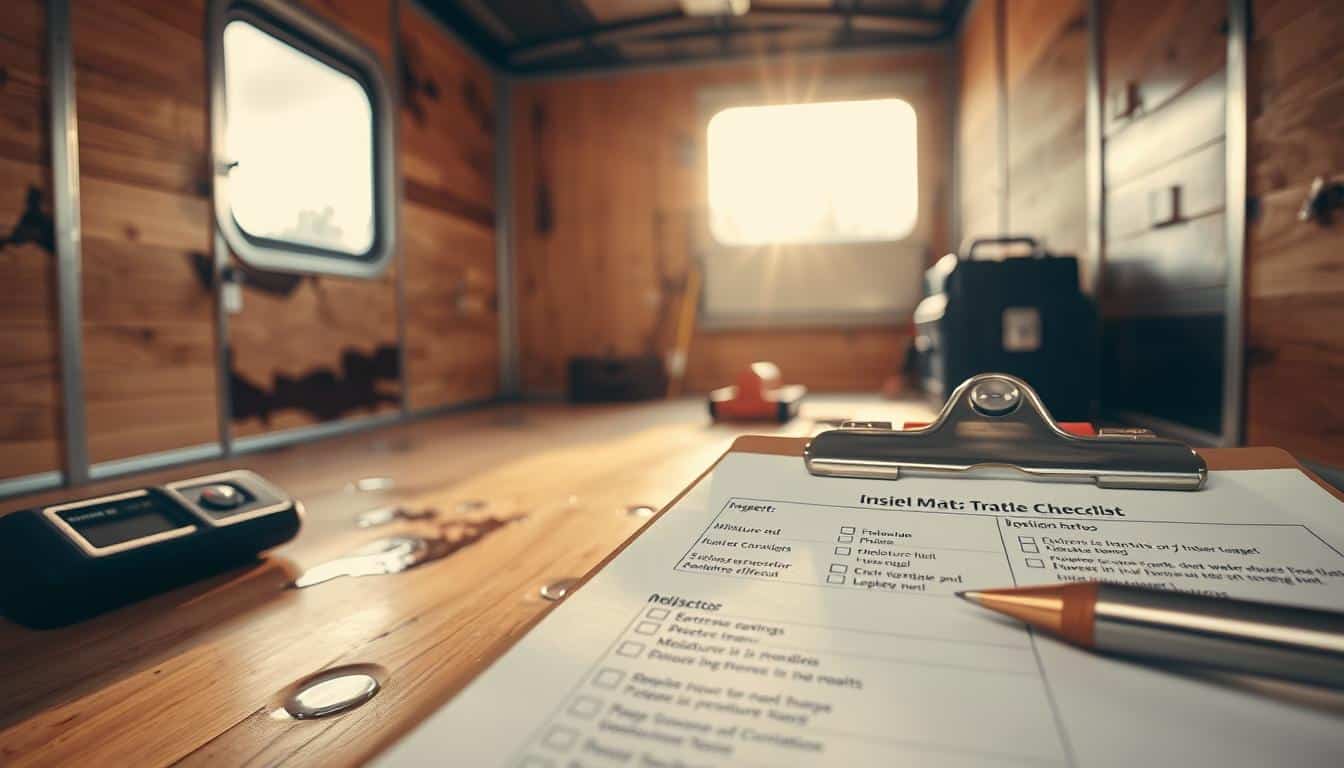
Maintaining the structural integrity of your mobile units requires constant vigilance. We believe that a professional trailer moisture damage report serves as the essential foundation for long-term safety and equipment longevity.
Water ingress often hides behind interior panels, leading to silent decay that compromises your investment. By establishing a clear baseline for regular inspections, we help owners identify risks before they escalate into costly repairs.
Our comprehensive framework provides the guidance you need to keep your assets in peak condition. Understanding these hidden threats allows you to protect your equipment throughout its entire operational lifespan.
Key Takeaways
- Regular inspections are vital for maintaining structural safety.
- Hidden water ingress often leads to significant long-term decay.
- A professional assessment establishes a necessary baseline for maintenance.
- Early detection prevents expensive repairs and extends equipment life.
- Proactive management ensures your assets remain in top operational condition.
Understanding Trailer Moisture Damage
We often overlook the silent impact of moisture until it compromises the structural integrity of our equipment. Moisture damage is not merely a cosmetic issue; it is a progressive degradation that affects the core materials of your trailer. By identifying these risks early, we can prevent minor leaks from turning into major structural failures.
What is Trailer Moisture Damage?
At its core, moisture damage refers to the physical breakdown of materials caused by prolonged exposure to water. When moisture infiltrates the internal cavities of a trailer, it creates an environment where wood rot and metal corrosion thrive. This process often occurs hidden behind interior panels, making it difficult to detect without specialized knowledge.
“Structural stability depends entirely on the integrity of the insulation and the frame. Once moisture breaches the seal, the clock starts ticking on the lifespan of the entire unit.”
Common Causes of Moisture Damage
Several factors contribute to the accumulation of water within insulated panels. We frequently see damage stemming from a combination of environmental exposure and mechanical wear. The most common culprits include:
- Compromised seals: Aging silicone or rubber gaskets around windows and doors.
- Structural leaks: Micro-fractures in the roof or side panels caused by road vibrations.
- Condensation buildup: Poor ventilation leading to trapped humidity inside the trailer walls.
- External damage: Impacts from debris that breach the outer protective skin.
Signs of Moisture Damage
Recognizing the subtle indicators of internal water damage is essential for every owner. While the damage is often internal, the trailer will usually provide early warning signs if you know where to look. We recommend checking for these specific indicators during your routine maintenance:
- Soft or spongy spots on the floor or wall panels.
- Discoloration or bubbling of the interior wall coverings.
- A persistent musty or damp odor inside the trailer.
- Visible rust streaks appearing near joints or fasteners.
If you notice any of these symptoms, it is vital to act quickly. Addressing these issues early prevents the spread of rot and ensures that your trailer remains safe and reliable for years to come.
Importance of Regular Inspections
Just as multi-compound tire technology balances harder centers for durability with softer shoulders for grip, your trailer requires a balanced approach to maintenance to ensure long-term performance. We view consistent monitoring as the primary defense against structural failure. By prioritizing a thorough moisture inspection report, you can identify small leaks before they escalate into expensive repairs.
Benefits of Regular Trailer Inspections
Routine checks provide peace of mind and protect your financial investment. When you catch vulnerabilities early, you avoid the catastrophic costs associated with rot and mold. A professional moisture inspection report helps maintain the safety of your equipment on the road.
“An ounce of prevention is worth a pound of cure, especially when it comes to the structural integrity of your transport assets.”
How Often Should We Inspect?
We recommend a baseline inspection at least twice a year, ideally before and after the winter season. If your trailer is used for heavy-duty transport or sits in humid environments, you should increase this frequency. Consistent scheduling is the key to catching issues before they become visible to the naked eye.
Key Inspection Areas
Focusing on specific zones will streamline your maintenance process. You should pay close attention to the following areas during every moisture inspection report:
- Roof seams and seals: These are the most common entry points for water.
- Window and door frames: Check for cracked caulking or loose weather stripping.
- Floor joints and corners: Look for soft spots or discoloration that indicate trapped moisture.
- Under-carriage areas: Ensure that protective coatings remain intact to prevent rust.
Identifying Moisture Damage
We approach moisture detection with the same precision found in high-end manufacturing quality checks. Just as modern motorcycle tires rely on silica-enhanced compounds to ensure grip in wet conditions, your trailer requires high-quality materials and rigorous monitoring to stay safe. Detecting hidden water intrusion early is essential to maintaining the structural integrity of your vehicle.
Visual Indicators of Damage
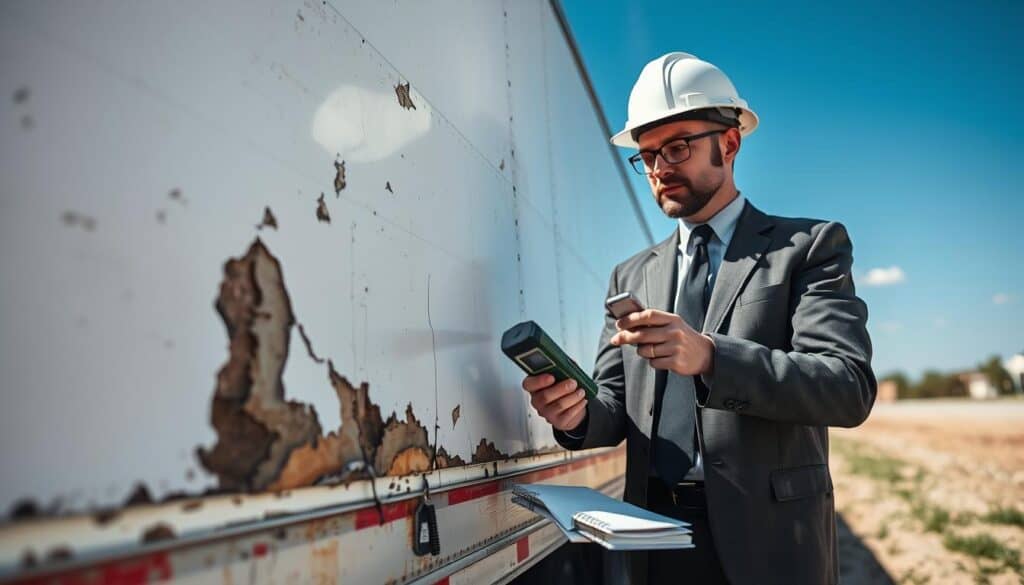
Often, the first signs of trouble are subtle changes in the trailer’s interior or exterior surfaces. We recommend performing a thorough walk-around to spot these common red flags:
- Discoloration or dark spots on wall panels and ceilings.
- Soft or spongy spots in the flooring, especially near corners.
- A persistent musty or damp odor that does not dissipate with ventilation.
- Peeling wallpaper or bubbling paint near window frames.
Tools for Moisture Detection
While visual checks are a great start, some issues remain hidden behind finished walls. Our team utilizes advanced technology to conduct a comprehensive moisture damage assessment. These tools allow us to see beyond the surface:
- Electronic Moisture Meters: These devices measure the electrical resistance of materials to pinpoint hidden saturation.
- Thermal Imaging Cameras: These tools detect temperature variations that often indicate trapped moisture behind panels.
- Borescope Inspections: We use small cameras to view internal cavities without causing unnecessary damage to the structure.
When to Seek Professional Help
There is a clear threshold where DIY efforts should transition to expert intervention. If you notice structural warping or extensive mold growth, it is time to contact a specialist. A professional moisture inspection report provides the detailed documentation needed to address deep-seated issues effectively.
We suggest seeking help if you cannot identify the source of a leak after a basic inspection. Early intervention prevents the degradation of insulation and framing, saving you significant costs in the long run. Relying on a certified moisture damage assessment ensures that every hidden risk is identified and addressed with professional care.
Assessing Repair Needs
Making informed decisions about your trailer starts with a thorough assessment of repair needs. We believe that understanding the full scope of the problem is the foundation for any successful moisture damage restoration project. By identifying the depth of the decay early, you can avoid unnecessary expenses and ensure the longevity of your vehicle.
Types of Repairs for Moisture Damage
The specific approach to fixing your trailer depends on how deep the water has penetrated the structure. Minor issues might only require surface-level sealing, while severe cases often demand more invasive techniques. Precision is vital when dealing with compromised materials to prevent future recurrence.
- Sealant replacement: Removing old, cracked caulk and applying high-grade waterproof sealants.
- Panel replacement: Swapping out water-logged wall or floor panels to prevent mold growth.
- Structural reinforcement: Replacing rotted wooden frames with treated lumber or composite materials.
- Insulation renewal: Installing new, moisture-resistant insulation to maintain thermal efficiency.
Cost of Repairs
Financial planning is a critical component of the recovery process. If the damage is extensive, you may need to consider a trailer finance adjustment for moisture damage to cover the costs of professional intervention. Keep in mind that standard stock items for these repairs are typically ready for shipment within 15-30 days, which can influence your project timeline.
Several factors dictate the final price of your restoration. These include the size of the affected area, the quality of materials used, and the labor hours required for specialized tasks. We always recommend obtaining a detailed quote before committing to a specific repair path.
DIY vs. Professional Repairs
Many owners wonder if they should handle the work themselves or hire experts. While DIY fixes can save money on labor, they often lack the long-term reliability provided by professional services. Improperly sealed joints or hidden moisture pockets can lead to even costlier problems down the road.
Professional technicians bring specialized tools and expertise that ensure the job is done right the first time. They can identify hidden structural weaknesses that an untrained eye might miss. Choosing professional help provides peace of mind and protects your investment for years to come.
Preventative Measures
Avoiding costly repairs is simple when you prioritize moisture damage prevention from day one. We find that taking small, consistent steps today saves you significant time and money in the future. By focusing on these core strategies, you ensure your trailer remains in peak condition for years to come.
Importance of Proper Ventilation
Proper airflow is the most effective way to stop water buildup inside your unit. When air circulates freely, it prevents condensation from settling on walls and ceilings. We recommend the following practices to maintain a dry interior:
- Keep roof vents slightly open during storage to allow moisture to escape.
- Use moisture-absorbing crystals or dehumidifiers in enclosed spaces.
- Ensure that all interior cabinets remain slightly cracked to promote air movement.
Sealing and Insulation Tips
The exterior shell of your trailer acts as your first line of defense against the elements. Applying high-quality moisture control solutions to vulnerable seams is essential for long-term protection. We suggest checking these areas at least twice a year to ensure the integrity of your seals.
Regularly inspecting your sealant allows you to catch small cracks before they become major leaks. Use professional-grade, flexible sealants that can withstand temperature fluctuations without cracking. Proper insulation also helps regulate internal temperatures, which significantly reduces the risk of condensation forming on cold surfaces.
Choosing the Right Storage Conditions
Where you park your trailer plays a massive role in its overall health. Implementing effective trailer moisture mitigation starts with selecting a location that minimizes exposure to damp ground and heavy rain. If possible, store your trailer on a concrete pad rather than directly on grass or dirt.
If you must store your trailer outdoors, consider these protective measures:
- Use a breathable, high-quality cover to protect the roof from direct water pooling.
- Park in a location with good drainage to prevent standing water near the tires.
- Avoid parking under trees, as falling debris can block vents and trap moisture.
By following these guidelines, you create a robust barrier against environmental hazards. We encourage all owners to view these steps as an investment in the longevity and value of their equipment.
The Role of MOTOEXPERT
At MOTOEXPERT, we believe that every trailer owner deserves a clear and honest evaluation of their equipment’s condition. We specialize in providing comprehensive solutions that go beyond simple fixes, ensuring your trailer remains safe and functional for years to come.

Our Commitment to Quality Repairs
We maintain rigorous repair standards to ensure that every intervention meets the highest industry benchmarks. Our technicians use premium materials and proven techniques to restore your trailer to its original performance levels.
Quality is not just a goal; it is the foundation of our service. We prioritize long-term durability over quick, temporary patches, giving you peace of mind on the road.
Expertise in Moisture Damage Assessment
Accurate diagnosis is the most critical step in any restoration project. Our team leverages deep technical knowledge to perform a thorough moisture damage assessment that leaves no stone unturned.
We provide a transparent report that outlines exactly what needs to be done. This actionable data allows you to make informed decisions about your maintenance budget and repair priorities.
“The precision and transparency provided by the team during the evaluation process were truly impressive. They identified hidden issues that others had completely overlooked.”
Customer Testimonials
Our reputation is built on the success of our clients and the reliability of our work. We are proud to share the experiences of those who have trusted us with their equipment:
- Reliability: Clients consistently praise our ability to meet deadlines without compromising on quality.
- Transparency: We ensure every moisture damage assessment is explained in simple, clear terms.
- Expertise: Our technical team is recognized for solving complex structural problems efficiently.
- Support: We remain available to answer questions long after the repair is complete.
We invite you to join our growing list of satisfied customers. By choosing our services, you are investing in the longevity and safety of your trailer through professional care and expert moisture damage assessment.
Case Studies: Successful Restorations
Examining successful restorations allows us to see the tangible benefits of proactive care. By reviewing past projects, we gain a clearer understanding of how effective moisture damage restoration can extend the operational lifespan of a trailer. These real-world scenarios demonstrate that even severe structural issues can be resolved with the right technical approach.
Example 1: Repair of a Damaged Trailer
We recently managed a project involving a commercial trailer that suffered from significant water ingress in the sidewalls. The internal insulation had become saturated, leading to hidden rot and structural instability. Our team performed a comprehensive trailer moisture mitigation process, which involved stripping the affected panels and replacing the compromised core materials.
Following the structural repairs, we applied high-grade sealants to all joints and seams. This intervention not only restored the trailer to its original strength but also ensured it met modern safety standards. The owner reported a significant improvement in performance and a complete absence of further leaks.
Example 2: Preventative Measures Implementation
In another instance, we worked with a fleet operator to overhaul their maintenance schedule. They struggled with recurring condensation issues that threatened their cargo integrity. We implemented a robust moisture damage prevention strategy that focused on upgrading ventilation systems and applying specialized moisture-resistant coatings.
By installing active airflow vents, we allowed trapped humidity to escape before it could condense on interior surfaces. This simple yet effective change drastically reduced the need for frequent repairs. The fleet operator now enjoys lower maintenance costs and increased reliability across their entire logistics network.
Lessons Learned from Real Cases
These experiences highlight that consistency is the key to long-term success. We have learned that early detection is far more cost-effective than waiting for visible signs of decay. Owners who prioritize regular inspections and timely interventions consistently avoid the most expensive pitfalls.
Ultimately, our goal is to empower trailer owners with the knowledge to protect their assets. By applying these proven techniques, you can ensure your equipment remains in top condition for years to come. We remain committed to sharing these insights to help you maintain a safe and efficient fleet.
FAQs Related to Moisture Damage
Our team at MOTOEXPERT has compiled the most common questions to help you maintain your trailer effectively. We understand that identifying and managing water intrusion can feel overwhelming for many owners. By addressing these frequent concerns, we aim to provide you with the clarity needed to protect your investment.
How Can I Tell If My Trailer Has Moisture Damage?
Detecting water issues early is crucial to preventing long-term structural decay. You should perform regular checks to identify potential trouble spots before they escalate into costly repairs.
- Musty or damp odors lingering inside the cabin.
- Visible water stains or discoloration on walls and ceilings.
- Soft or spongy spots on the floor, especially near corners.
- Peeling wallpaper or bubbling paint surfaces.
- Condensation buildup on windows that does not clear easily.
What Should I Do If I Suspect Damage?
If you notice any of the signs mentioned above, it is important to act quickly to minimize further harm. We recommend scheduling a professional inspection to obtain a formal trailer moisture damage report. This document serves as a vital record for insurance claims and helps us determine the exact scope of the necessary restoration work.
In the meantime, try to isolate the source of the leak if possible. Avoid using the trailer until a professional has assessed the integrity of the structure to ensure your safety.
How Long Does Repair Take?
The duration of the repair process depends entirely on the extent of the water intrusion. Minor issues might be resolved in a few days, while significant structural damage requires a more comprehensive approach.
We prioritize effective moisture control solutions to stabilize your trailer immediately upon arrival at our facility. Our goal is to provide a high-quality, lasting repair that restores your trailer to its original condition. We will always provide a clear timeline during your initial consultation so you know exactly what to expect.
Contacting Us for Assistance
Protecting your investment requires proactive management and expert oversight. We stand ready to guide you through every step of the restoration process or assist with your trailer finance adjustment for moisture damage.
Reaching Our Team
You can connect with our specialists through our official website or by calling our regional offices. We maintain a global perspective by collaborating with our manufacturing base in Qingdao, Shandong Province, China. This network ensures we provide high-quality solutions for every client.
Consultation Expectations
During your initial meeting, we outline the specific repair scope and project timelines. We provide clear cost estimates to help you manage your budget effectively. Our team works to ensure you have the necessary documentation for a trailer finance adjustment for moisture damage.
Service Coverage
We operate across Germany to support your maintenance goals. Our technicians travel to your location to assess structural integrity and provide reliable repair plans. Reach out today to secure your trailer and maintain its long-term value.
FAQ
How can I tell if my trailer has moisture damage?
What should I do if I suspect significant moisture damage?
Can a moisture inspection report help with my vehicle’s valuation?
What are the most effective moisture control solutions for trailers?
How long does moisture damage restoration typically take?
Is it possible to perform DIY repairs, or should I hire a professional?
How often should we schedule a trailer moisture inspection?
What documents does MOTOEXPERT provide for a trailer finance adjustment for moisture damage?
Likwidacja szkody: samodzielnie czy z MOTOEXPERT?
Porównaj, zanim ubezpieczyciel zdecyduje za Ciebie.
| ✗ Samodzielnie (kalkulator / AI ubezpieczyciela) | ✓ Z MOTOEXPERT + rekomendowany Adwokat |
|---|---|
| Wycena rzeczoznawcy ubezpieczyciela — interes płatnika, ryzyko zaniżenia | Niezależna certyfikowana opinia techniczna — pełny kosztorys wg stawek rynkowych |
| Pominięte pozycje: utrata wartości, auto zastępcze, holowanie | Komplet roszczeń: utrata wartości pojazdu, auto zastępcze, koszty dodatkowe |
| Samotne negocjacje z ubezpieczycielem, bariera językowa | Obsługa po polsku + rekomendowany Fachanwalt für Verkehrsrecht do reprezentacji prawnej |
| Sztuczna inteligencja nie stanie za Tobą w sądzie — koszt błędu ponosisz Ty | Szkoda z OC sprawcy w Niemczech przy jednoznacznej odpowiedzialności: uzasadnione koszty rzeczoznawcy co do zasady pokrywa ubezpieczyciel sprawcy (§ 249 BGB) |